
Atlantic Puffins: Clowns of the Sea
Photographed and written by:
Andy Wlasniewski
Atlantic Puffins: “Clowns of the sea,” “sea parrots,” stars of their own animated TV series. This member of the Alcidae family has captured the hearts of people the world over with their small stature, colorful bill, and clumsy cuteness. My daughters have been fans of the Irish animated series “Puffin Rock” since its debut in 2015, but let’s not get sidetracked. This story isn’t about a Netflix series, it’s about the birds themselves, and specifically my family’s trip to see and photograph them this summer.
Before we get into details, there are a few things you need to know about me. The first is that I’m a bird guy. I keep a Life List of every species of bird I’ve ever seen. I keep track of my life lists for the world, the US, my state (Pennsylvania), and even my specific county (Berks). If there’s an opportunity to add a bird to any of these lists, I’m in. The other thing you need to know about me is that I’m a wildlife photographer. I use my camera and lens to capture the beauty of the natural world, especially birds. I’m always looking for exciting new things to point my binoculars and camera lens at, even if it means traveling across the country. When it comes to Atlantic Puffins, it means almost 4,000 miles of driving and 16 hours of ferry rides to the farthest east you can get to in North America: Newfoundland.
It didn’t take much to convince the entire family to join me on this crazy road trip. Between cute Puffins, poutine, and Tim Hortons, there were plenty of reasons to load up the ol’ mini van. A brief detour to Prince Edward Island to soak in all things “Anne of Green Gables” was a little extra incentive I provided to soften the blow of hours and hours of car rides. The side trip also provided an opportunity to add another province to my glowing eBird map.
Having finalized our itinerary and arranged an in-person photography workshop with my friend and mentor, Ray Hennesey, we packed up and headed out. We drove up the east coast through New England and entered Canada at Calais, ME. From there we drove across New Brunswick and crossed the causeway onto Prince Edward Island, where we spent a few days enjoying the world created by Lucy Maude Montgomery, sampling the diverse local cuisine, and learning about the indigenous Mi’kmaq people. Once our time on PEI was done we hopped a short ferry to Nova Scotia and made a quick dash across Cape Breton to reach North Sydney and the ferry that would transport us and our vehicle the eight overnight hours to Newfoundland.
Once the ferry landed we still had almost nine hours to drive from Channel-Port aux Basques in the southwest corner of Newfoundland to Bonavista, our final destination on the northern coast. Bonavista is best known for being the spot that John Cabot landed on his exploration voyage from England in 1497. It became a hub for regional trade and commercial fishing. Today, the tourist town is a popular vacation destination for hikers, whale watchers, and puffin enthusiasts like us. Upon arrival we got settled in our Airbnb and visited the Bonavista Lighthouse to get a quick glimpse of some puffins and watch the sun set.
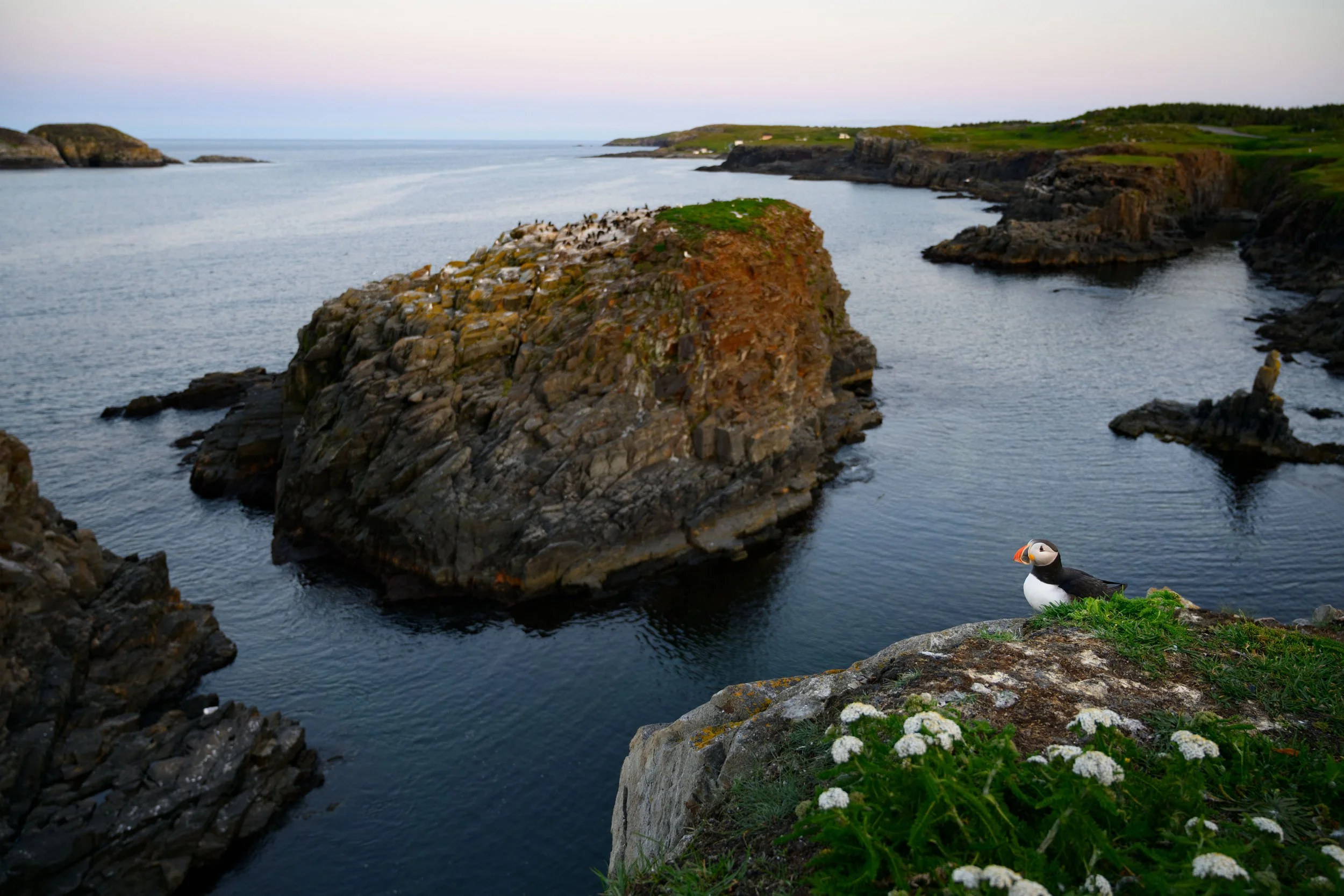
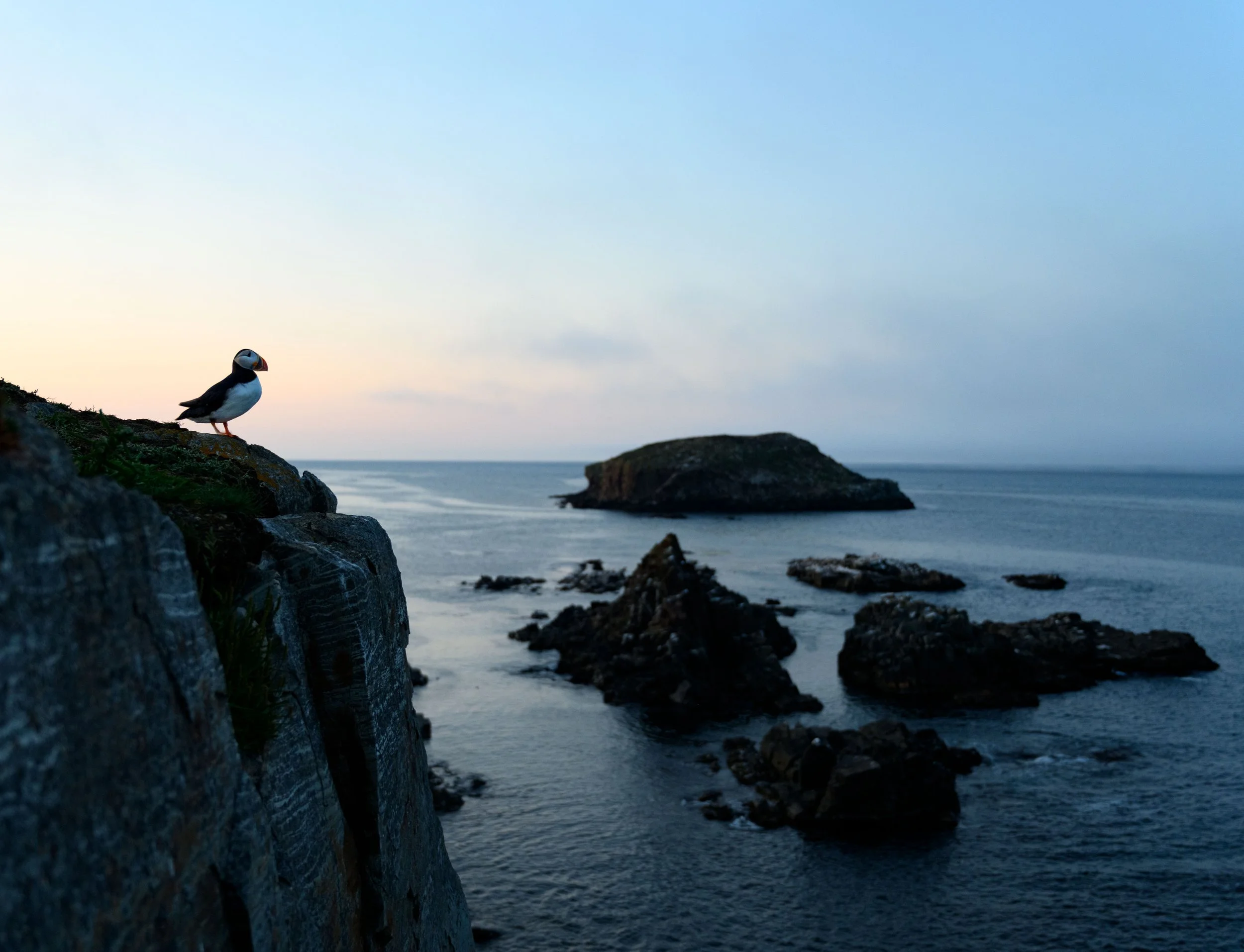
Atlantic Puffins nest in large colonies on small rocky islands just off the coast. This separation provides protection from predators on the mainland like Red Fox, and in the past, humans. Atlantic Puffin populations were in steep decline due to habitat destruction and hunting. Protection efforts have stabilized populations in Iceland and Europe, but the species still remains on the Threatened list in the US and Canada. Recent reintroduction efforts in several key locations in Maritime Canada and Maine hope to ensure future generations of puffins call our shores home.
Although our base camp was in Bonavista, the main puffin colony was a short drive down the coast to the even smaller town of Elliston. The town operates and maintains the viewing site where it is possible to experience the little birds up close as they fly on to the mainland at sunrise and sunset. This spot is famous with wildlife photographers like Ray. He and well-known Newfoundland photographer Brad James have been leading workshops here for several years. Over that time I’ve been enviously enjoying the images captured by Ray, Brad, and their lucky workshop participants. It was finally my chance to learn from Ray one-on-one. This opportunity was the focal point (ha, photography pun!) of the entire trip.
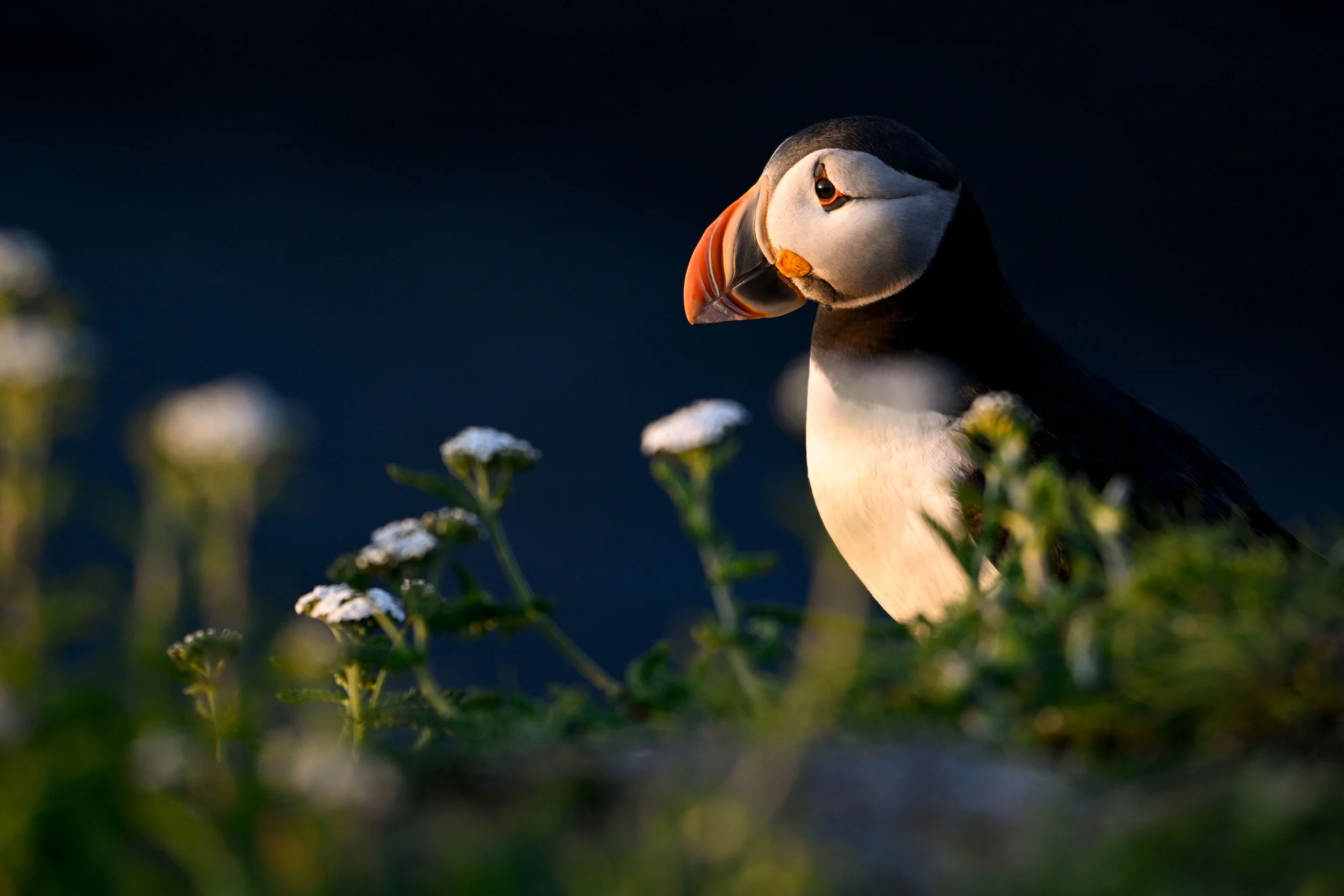
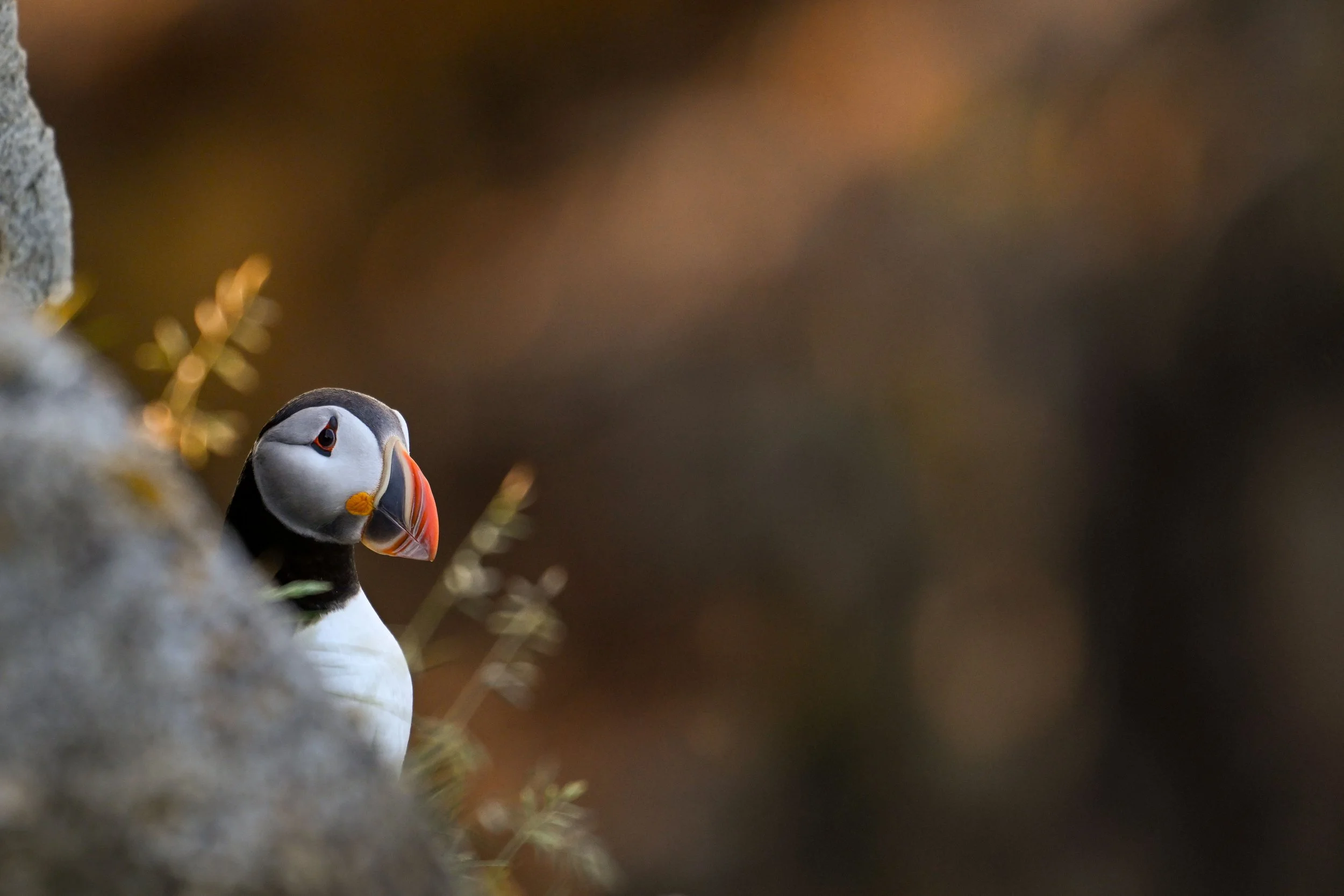
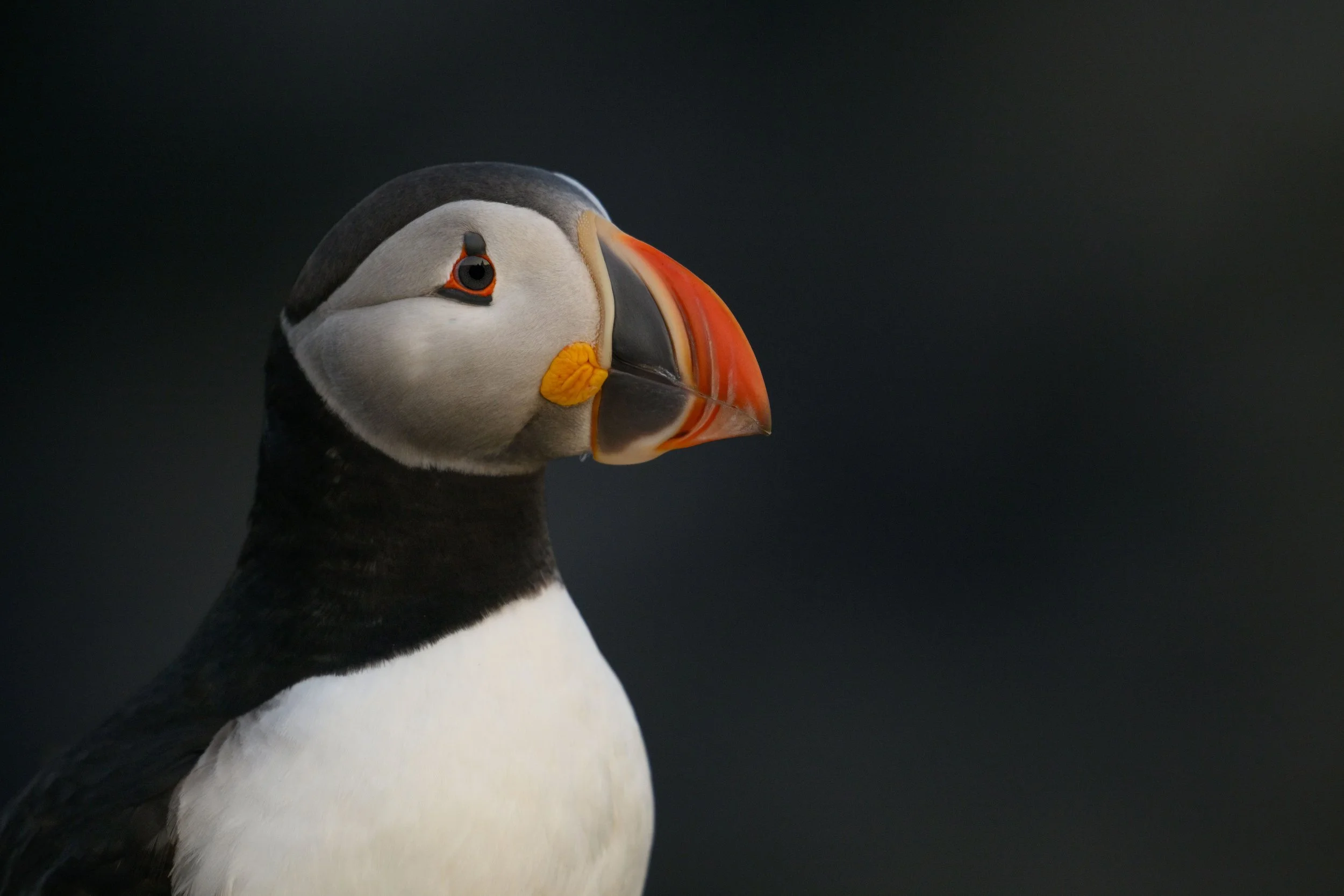
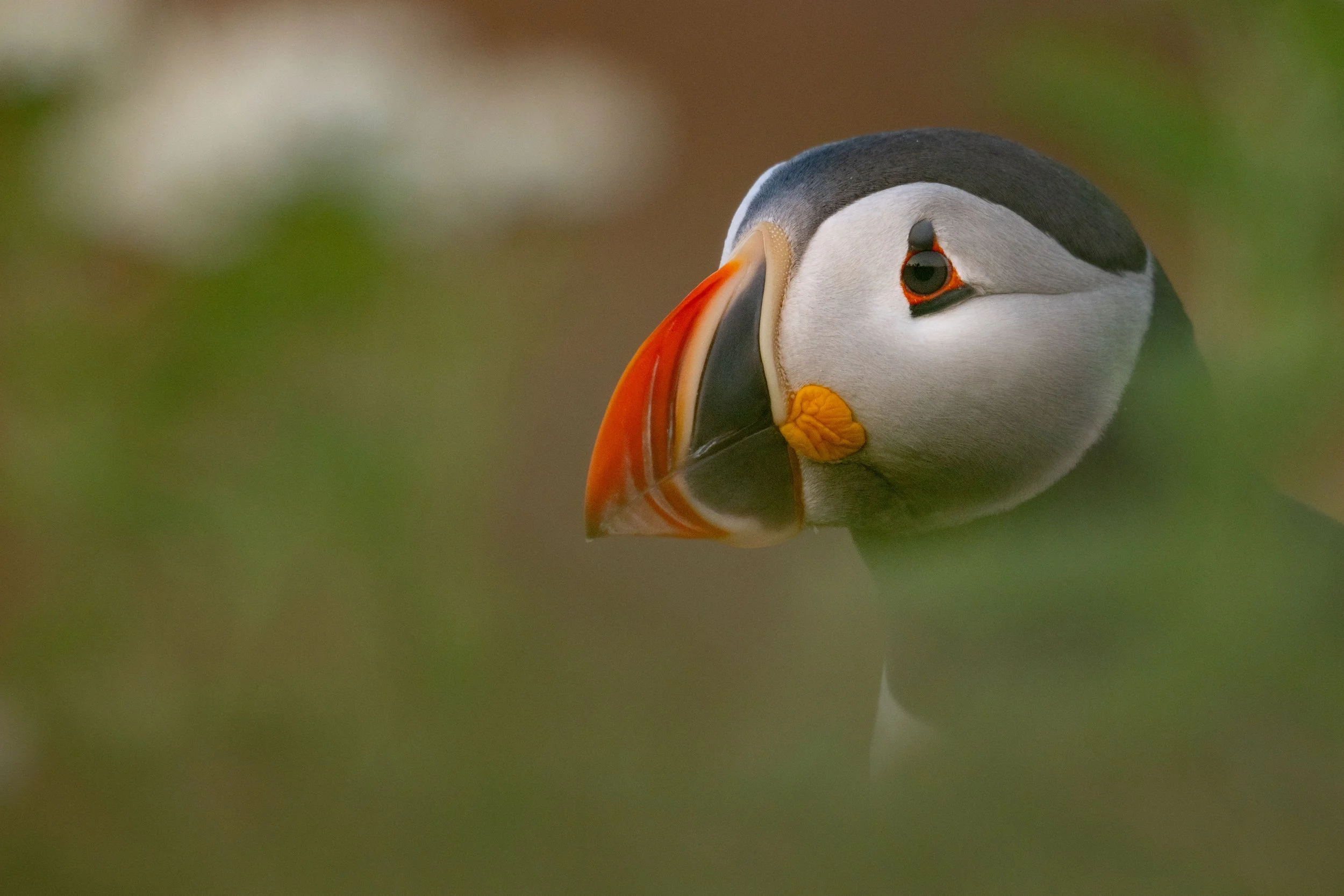
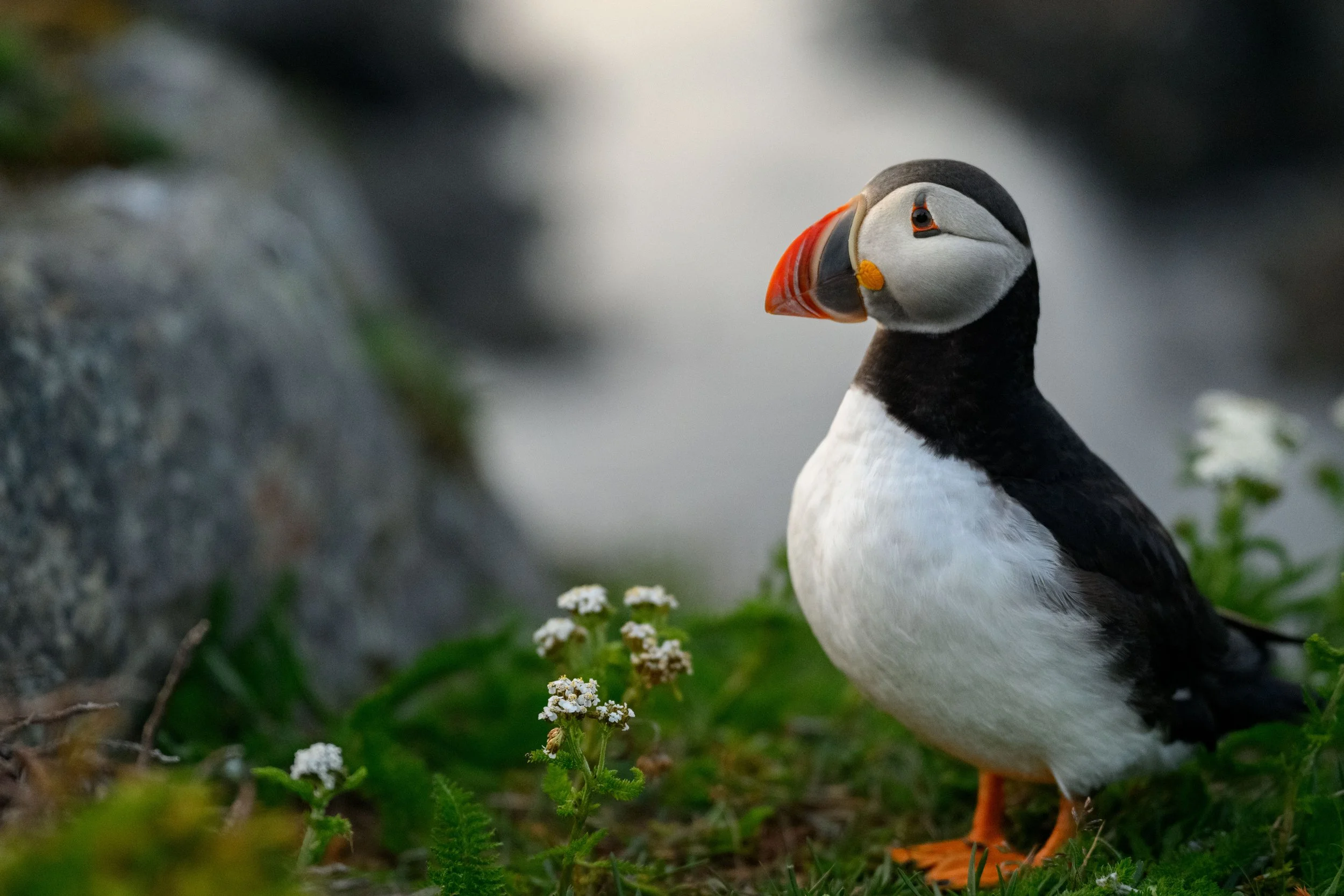
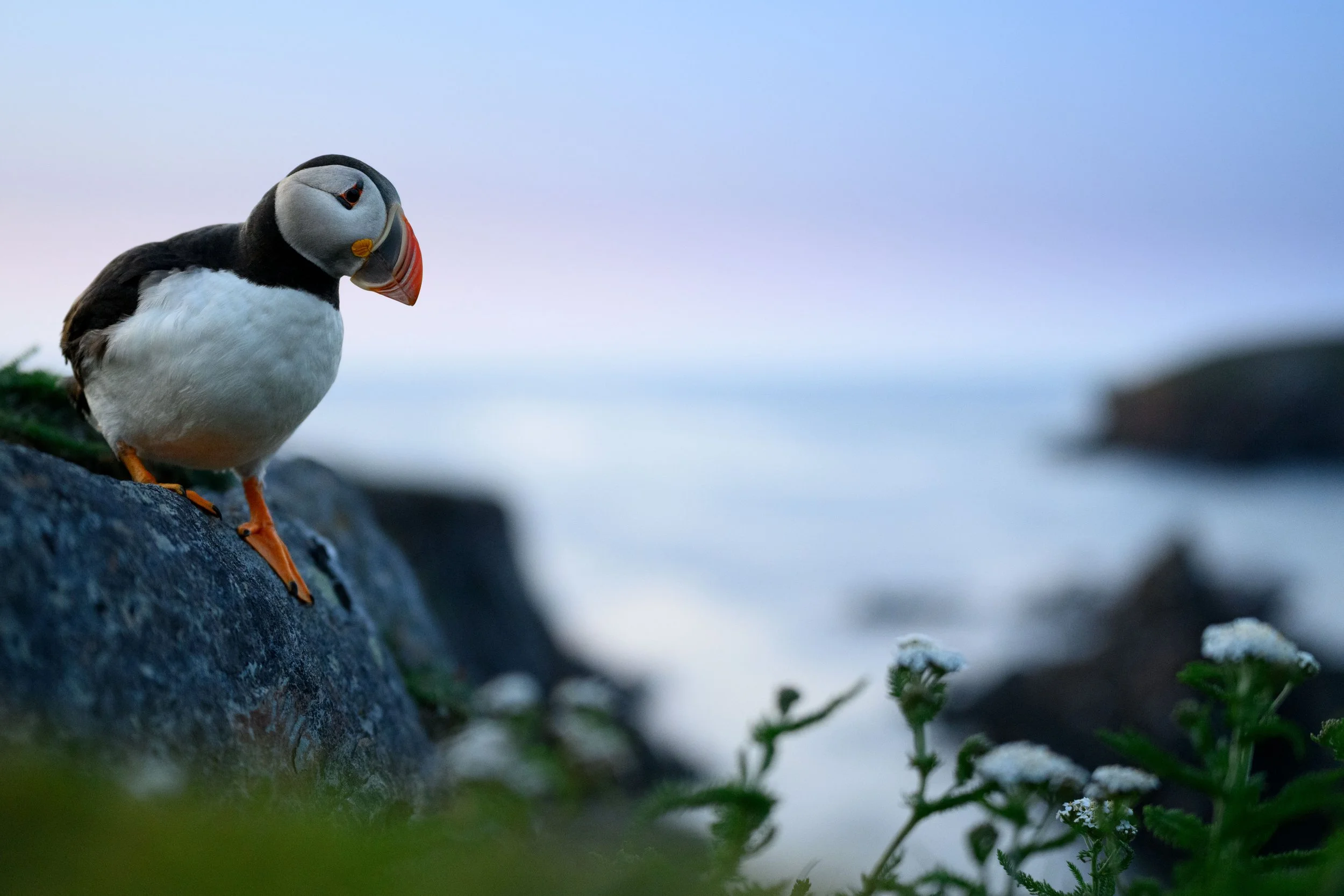
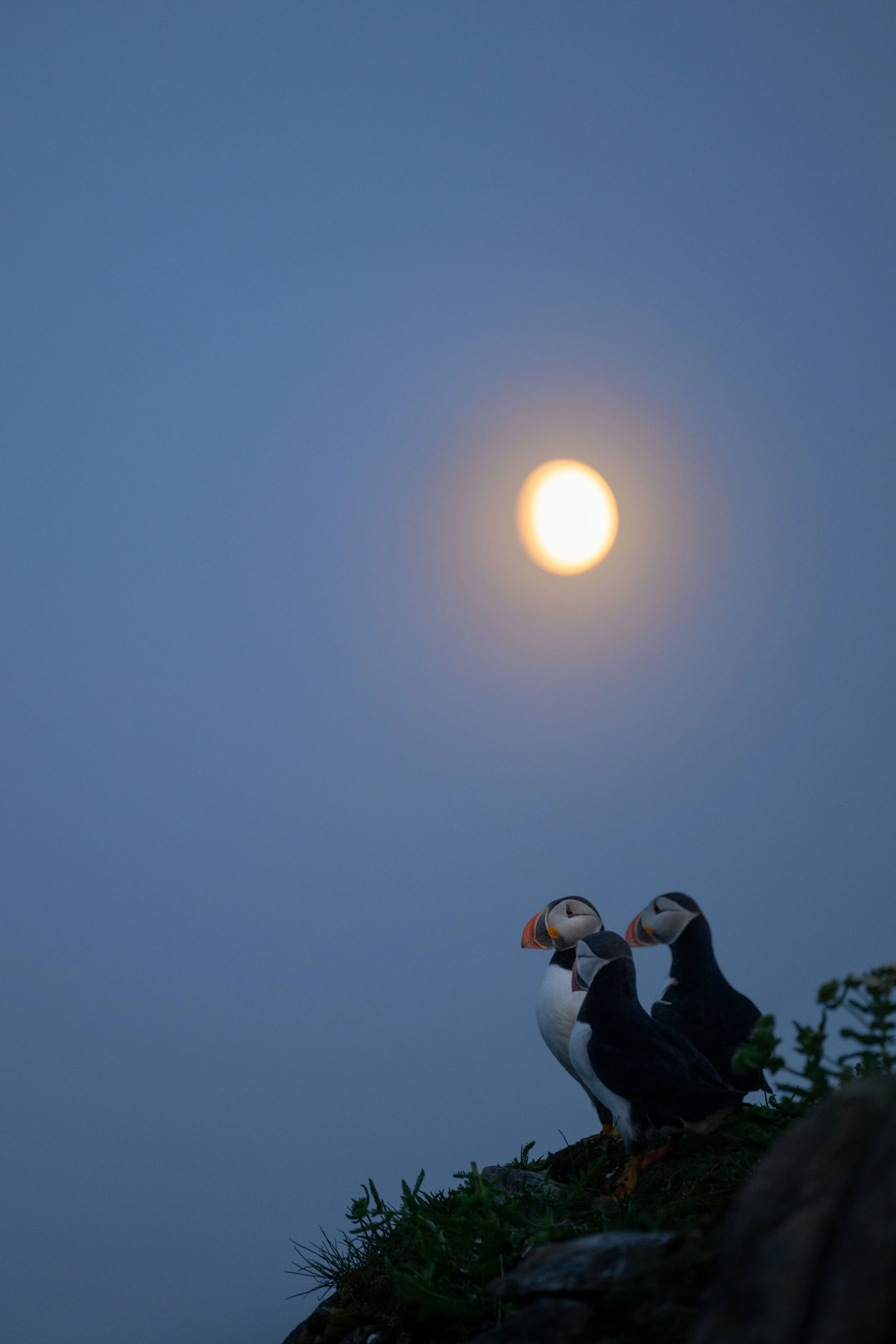
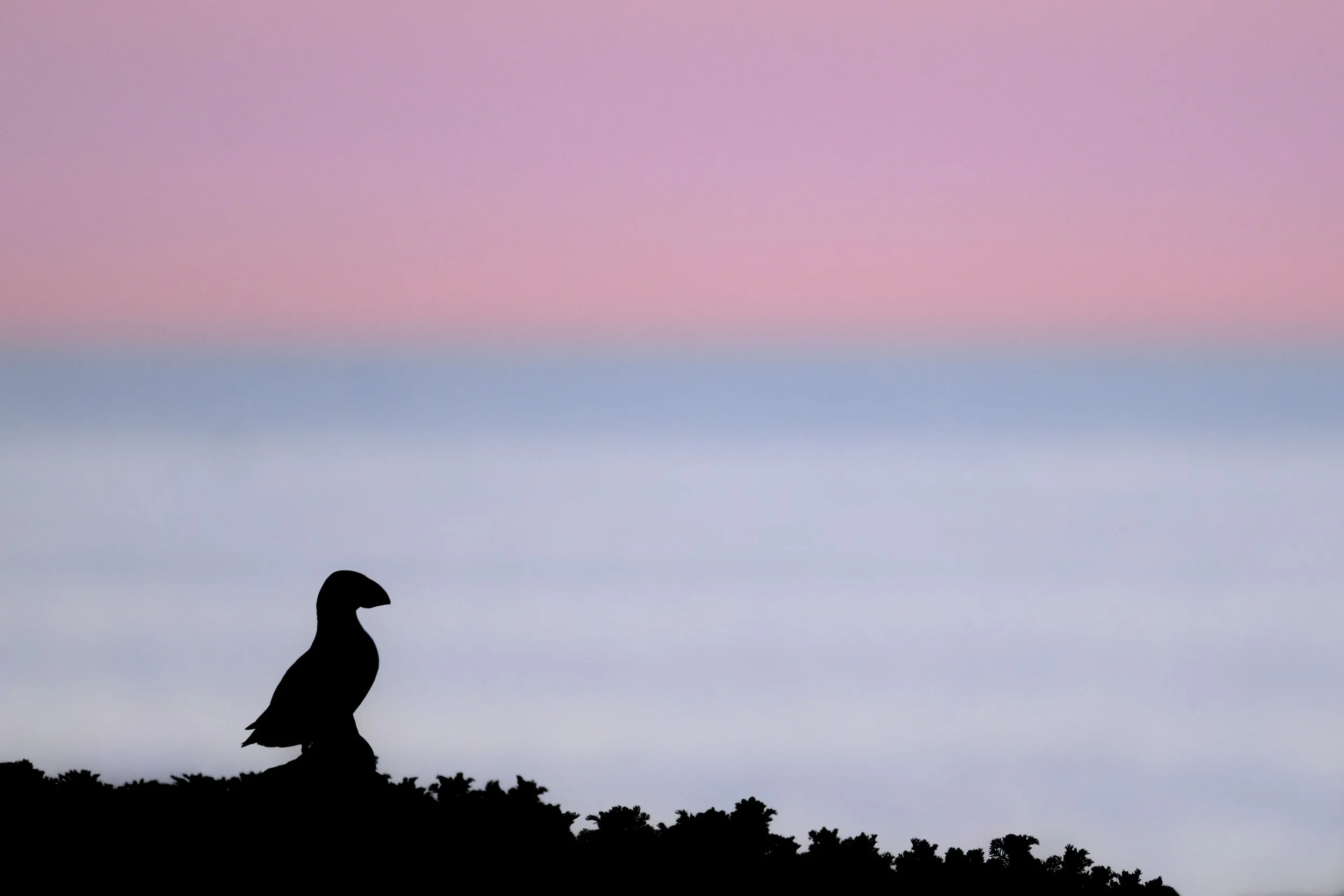
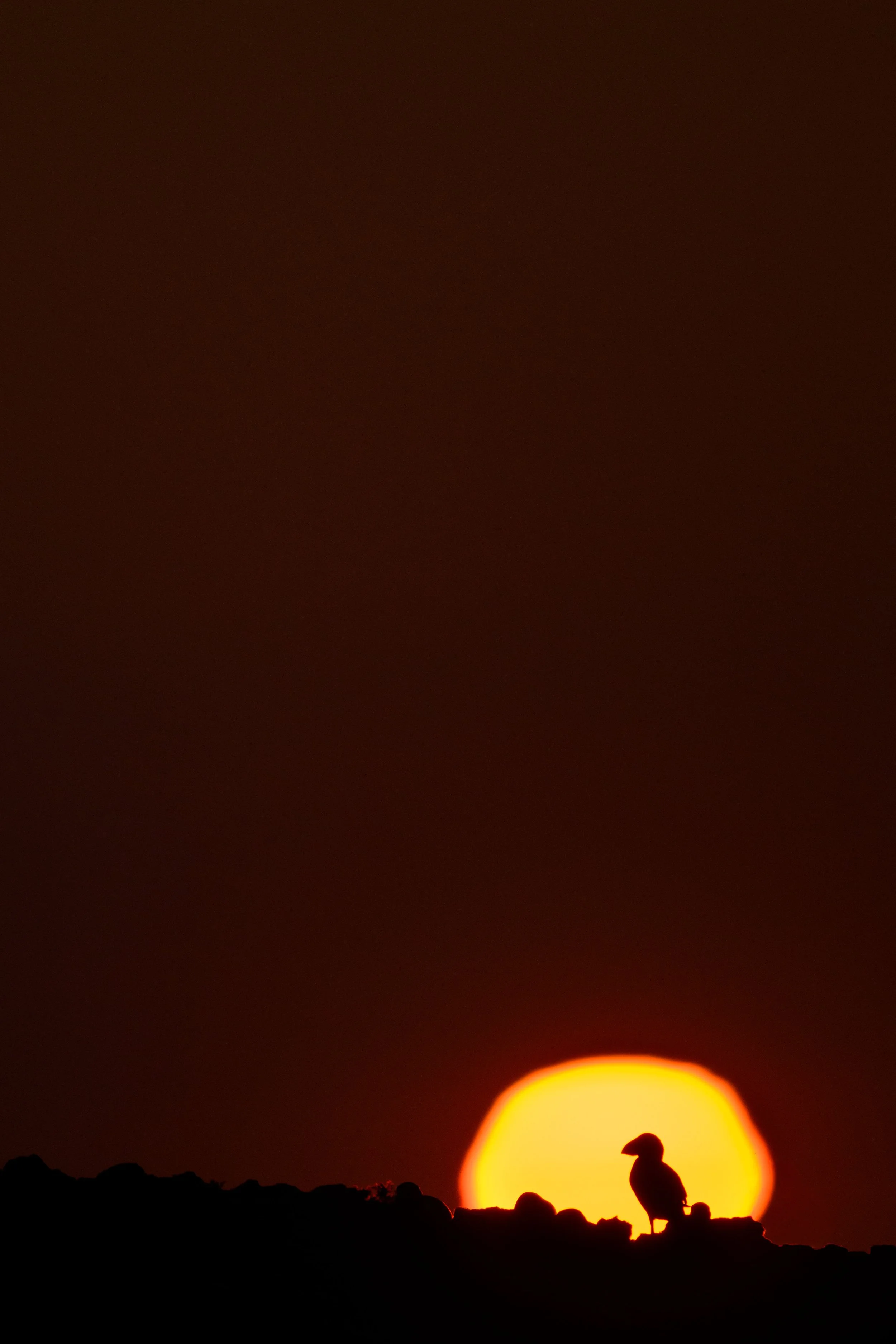
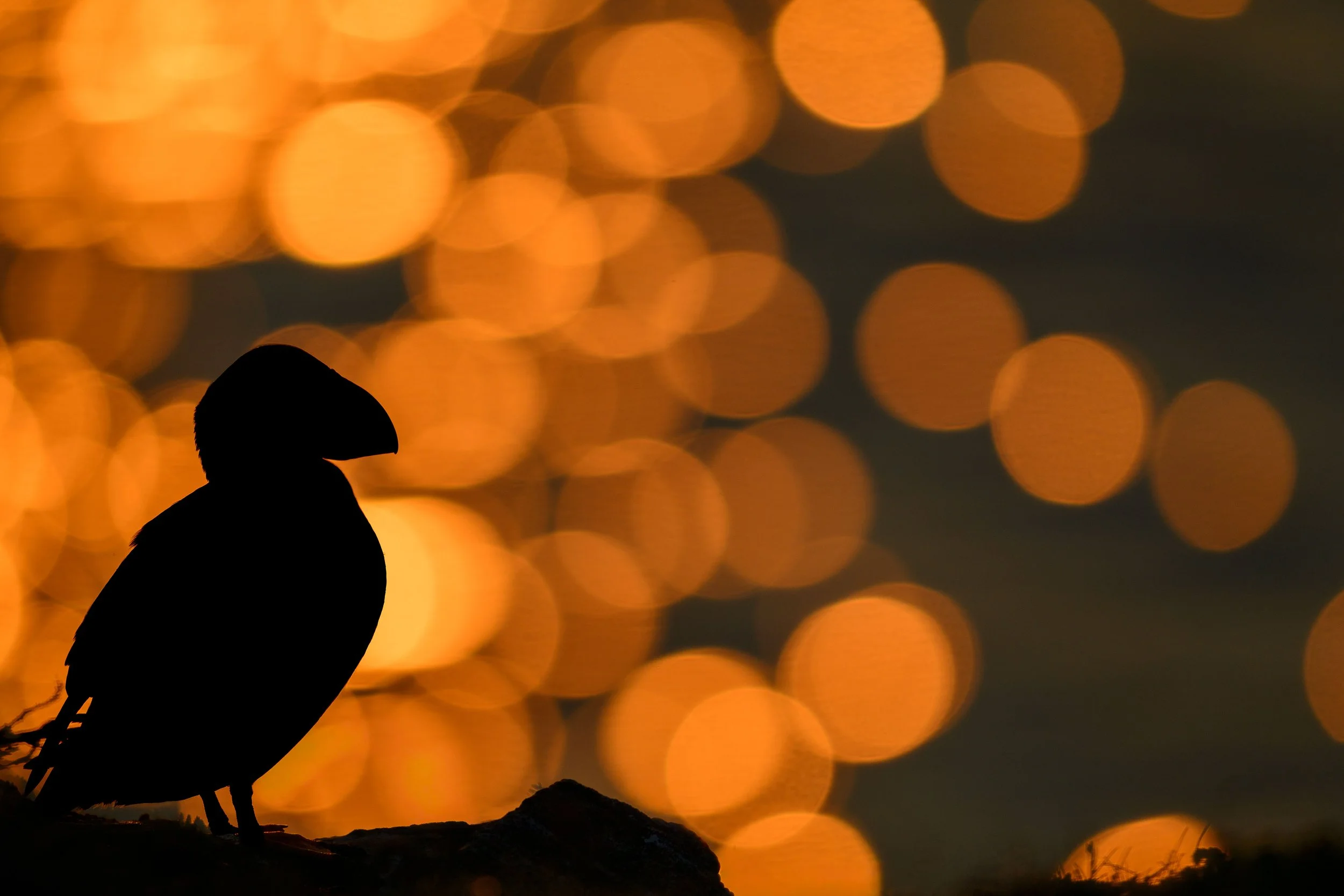
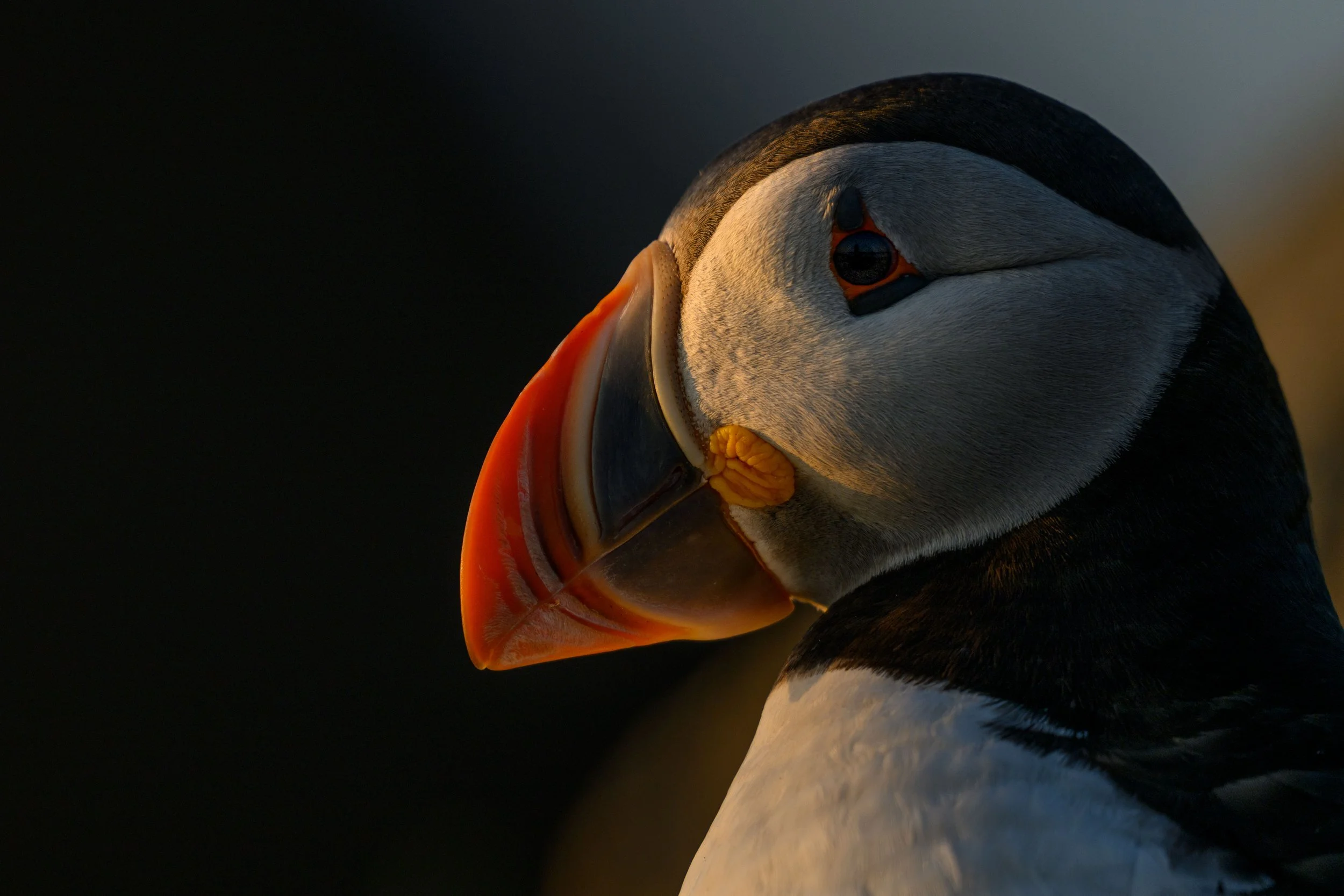
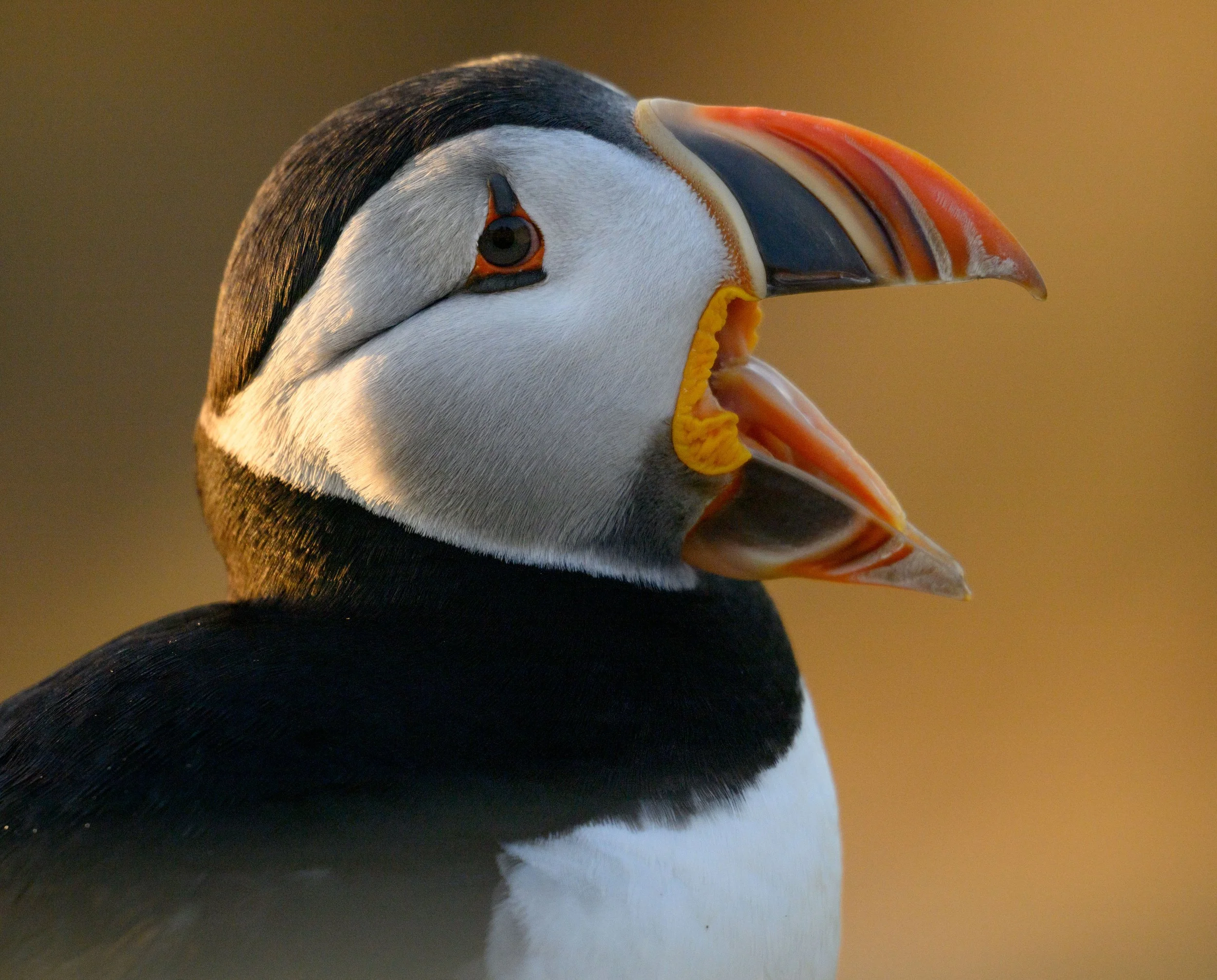
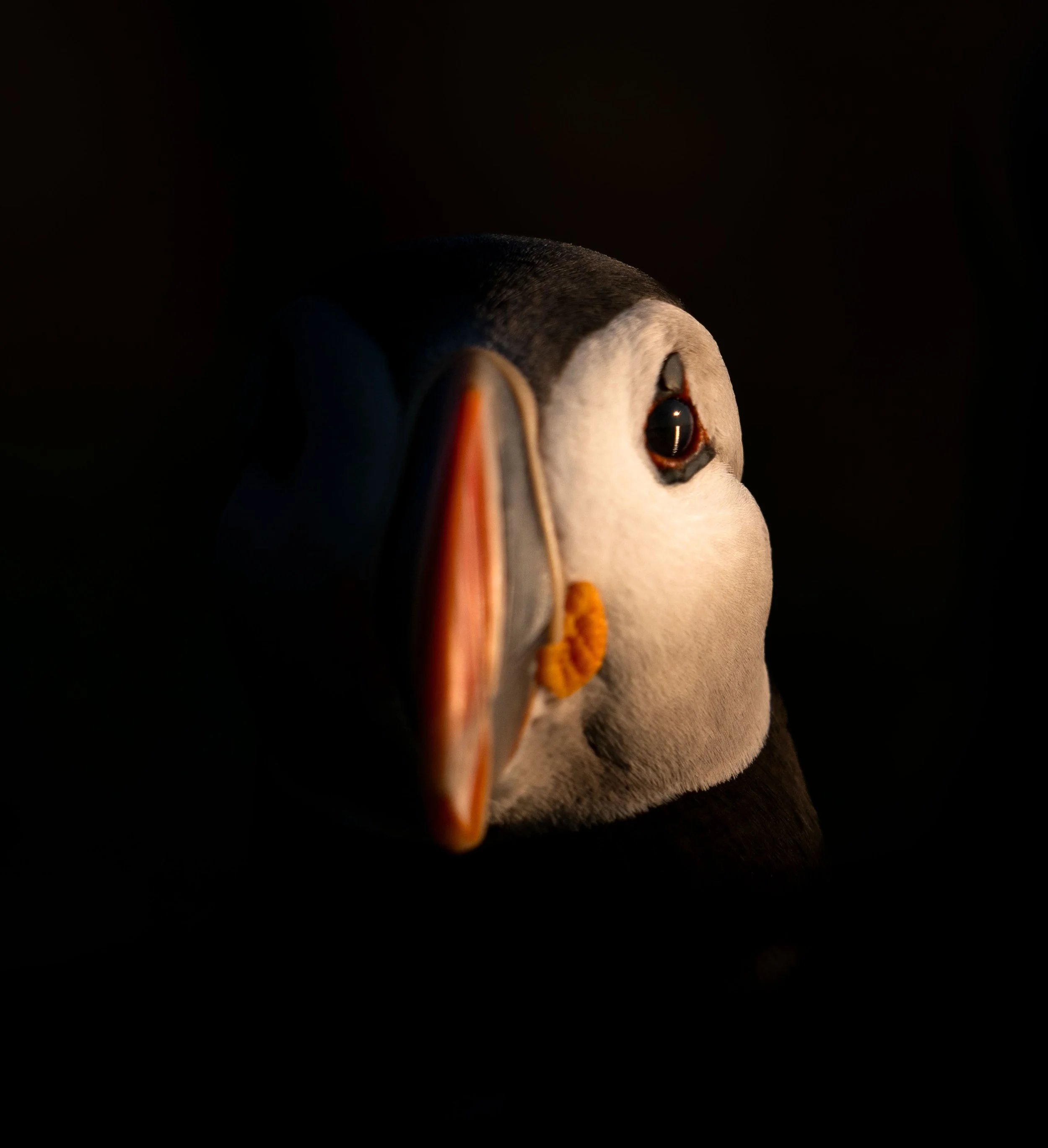
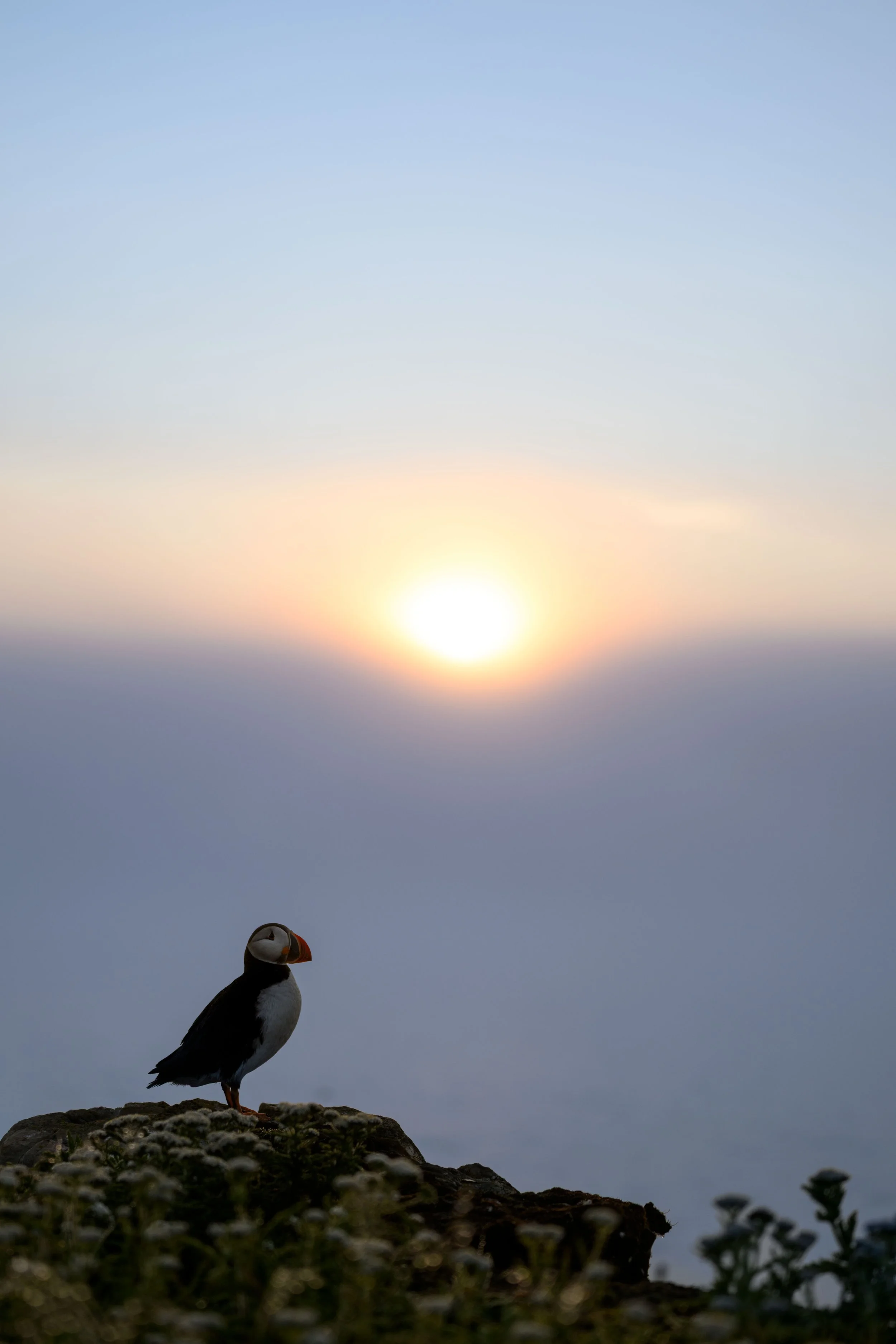
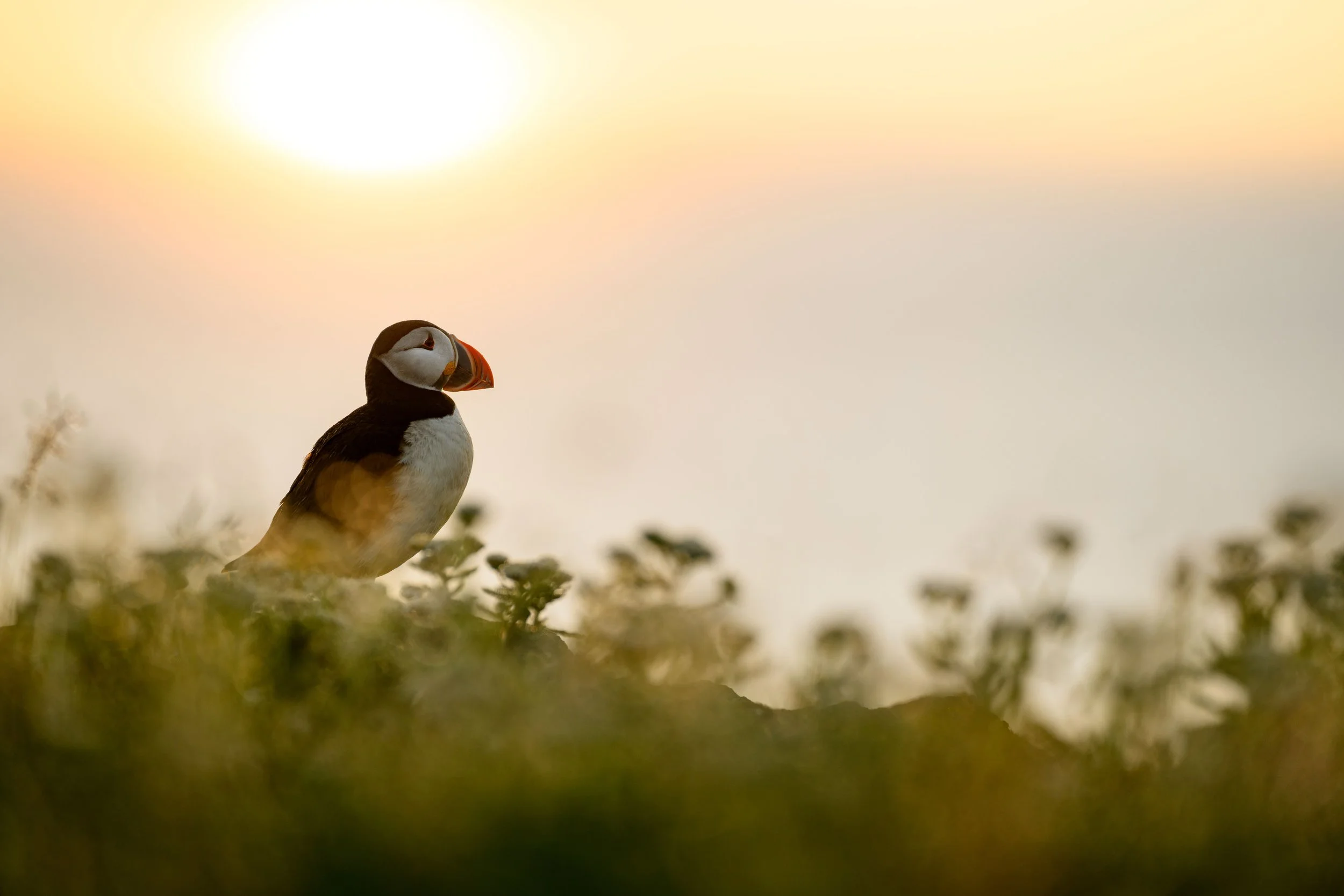
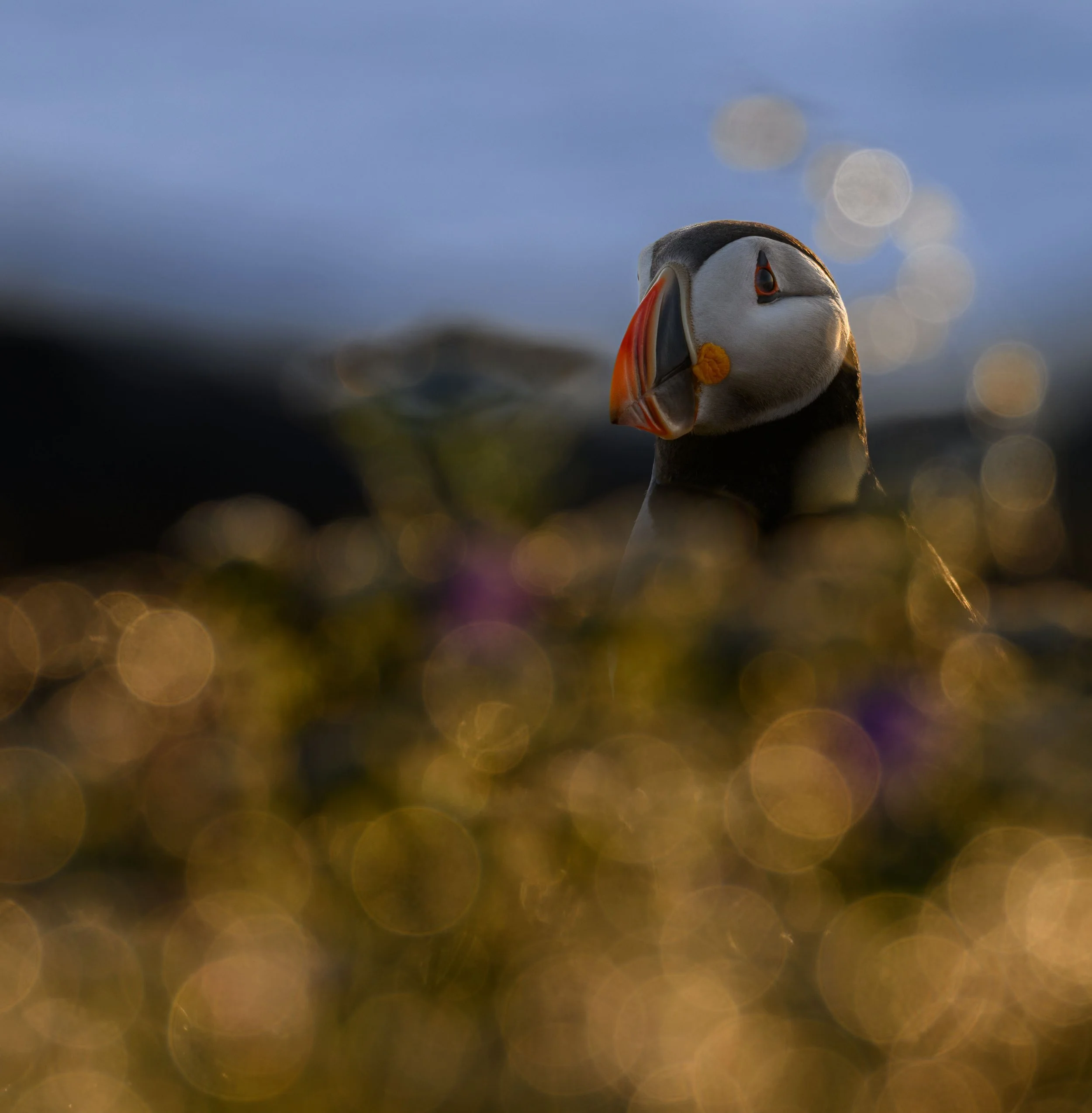
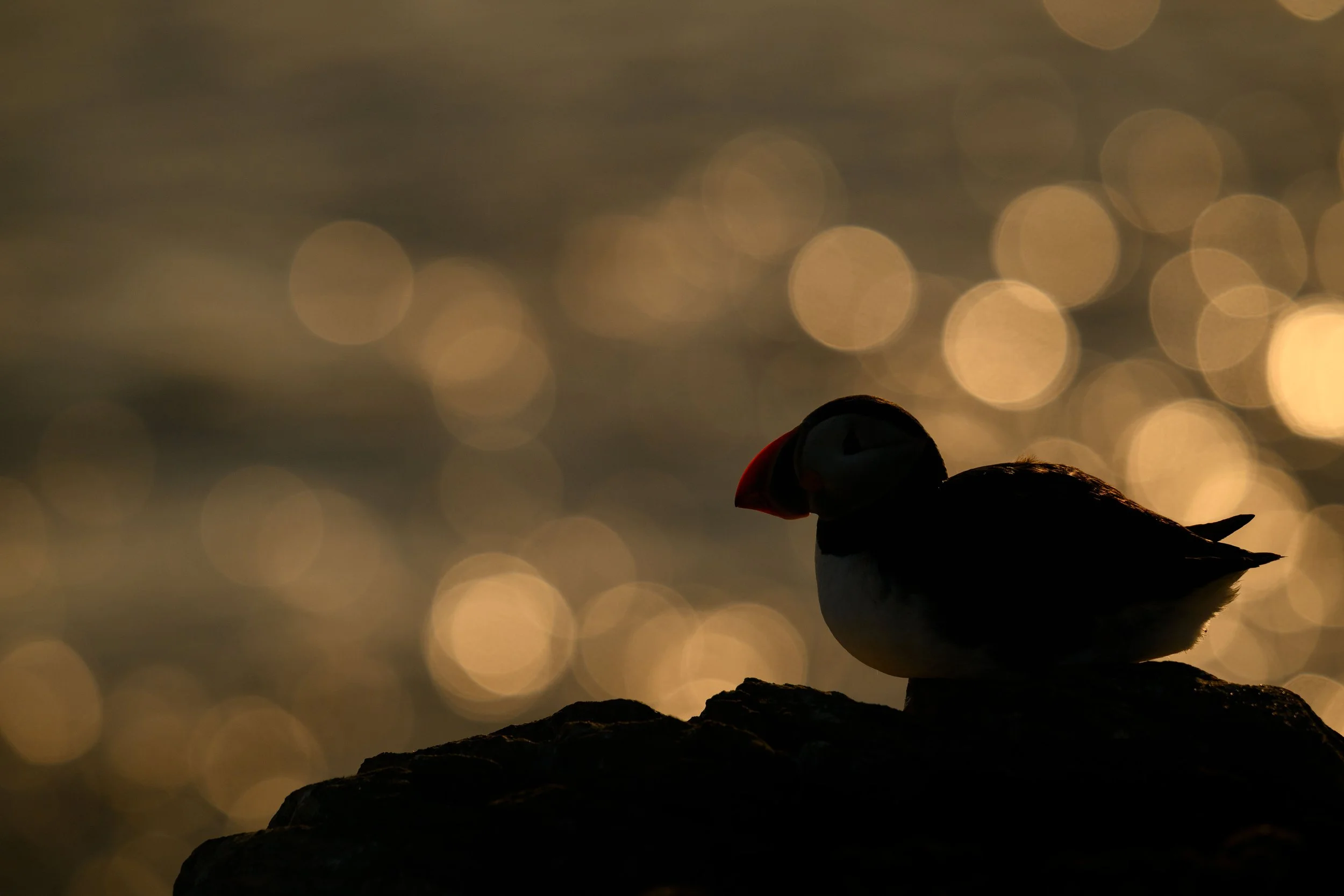
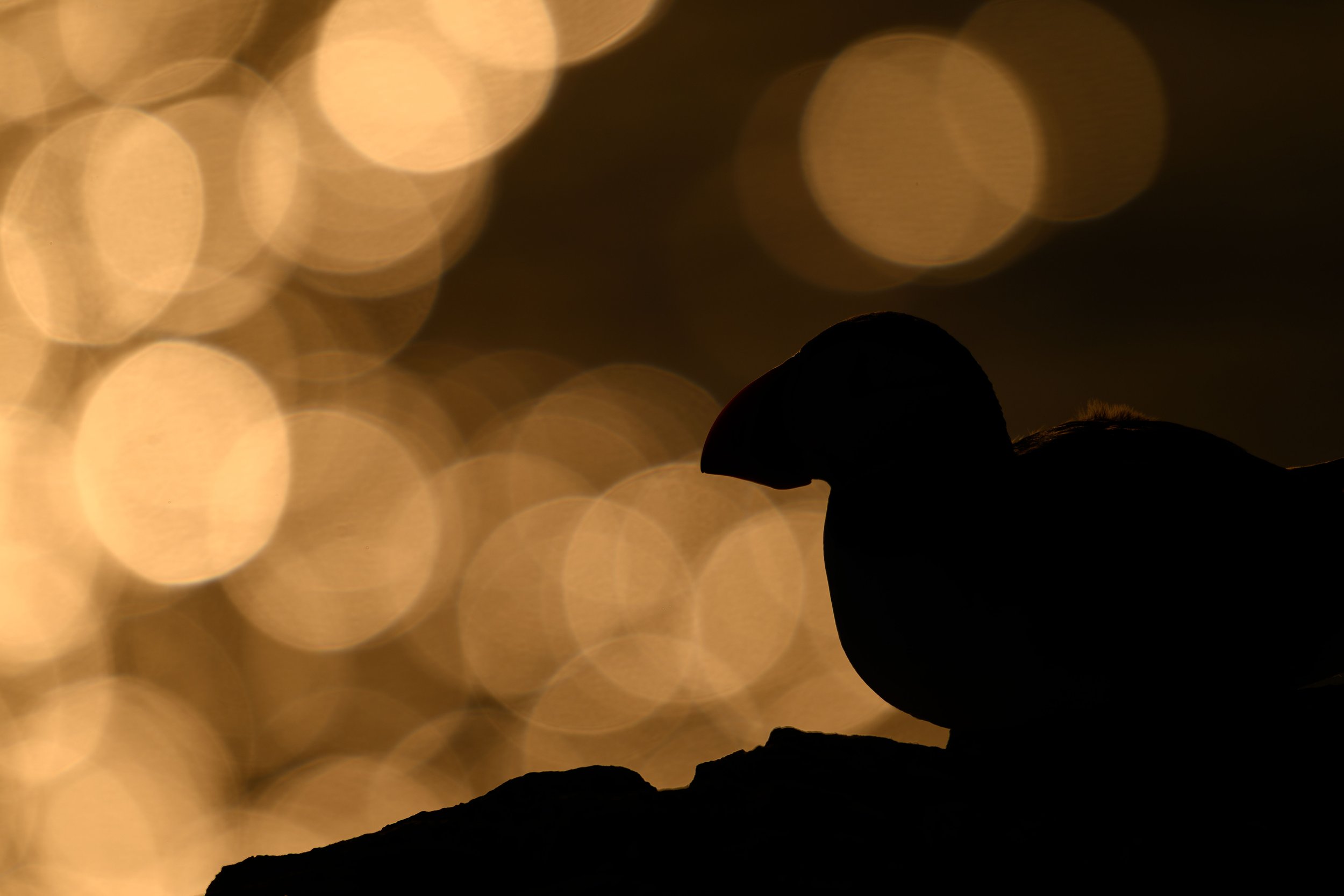
Over three consecutive sunrises and sunsets I experienced these amazing birds through my viewfinder. From 24-600mm and shutter speeds of 1/10,000 to 1/13 I worked to capture the personality of these little clowns that draw thousands of people to these rocky coasts year after year. I shot in perfect golden hour light. I shot in flat, overcast light. I shot when heavy fog and mist coated the grass and seaside yarrow in dew. Dew that transformed into spectacular bokeh, concentrating the light of the rising sun as it finally burnt through the clouds. I shot in blue hour with the moon rising over the cliffs. I captured the reflection of the sunrise in the eye of a puffin that sat within arms reach of me as I lay prone on the very edge of our continent. I ended up shooting thousands of images of Atlantic Puffins. Those were eventually culled down to a few hundred keepers that I have begun to edit and share.
I’m home in Pennsylvania now. Have been for several weeks. It took three full days to make it home from Newfoundland. Driving all that way isn’t the part of our trip that I will treasure. But every time I open my laptop I re-discover a shot that brings a smile to my face. There is a memory attached to every frame. A memory of being on those cliffs and experiencing those birds, of hearing them softly “mooing” at each other. Smelling the salt air and feeling the wind. Seeing the whales spout in the cove and watching the gulls drift by.
When people see my images on social media does it stir the same feeling? Have they been there themselves? I hope they have. And if they haven’t, then they need to go. They need to experience that place with those birds. If more of us go, then more of us will be motivated to help protect the cliffs that Atlantic Puffins call home. Because we owe it to future generations to be able to hear, smell, feel and see the same things that I did.
As winter approaches the puffins will head out to sea for the winter. They won’t touch Elliston, or any dry land for eight months. Some will never make it back to these cliffs. That’s the way nature works. Survival is hard. But, as humans we don’t have to make it harder. I can work to protect the places that these animals have called home for thousands of years. I can raise awareness to the challenges faced by birds in our rapidly changing world. Maybe if enough of us make noise things will begin to change. I hope that’s the case. Because I want to go back to Newfoundland and do it all over again.